Jump to section
CRYSTALS / 001
Citrine
Golden quartz, complicated histories, and one of the most recognizable stones in the modern crystal world.
Symbolic themes
Clarity · Vitality · Confidence · Abundance
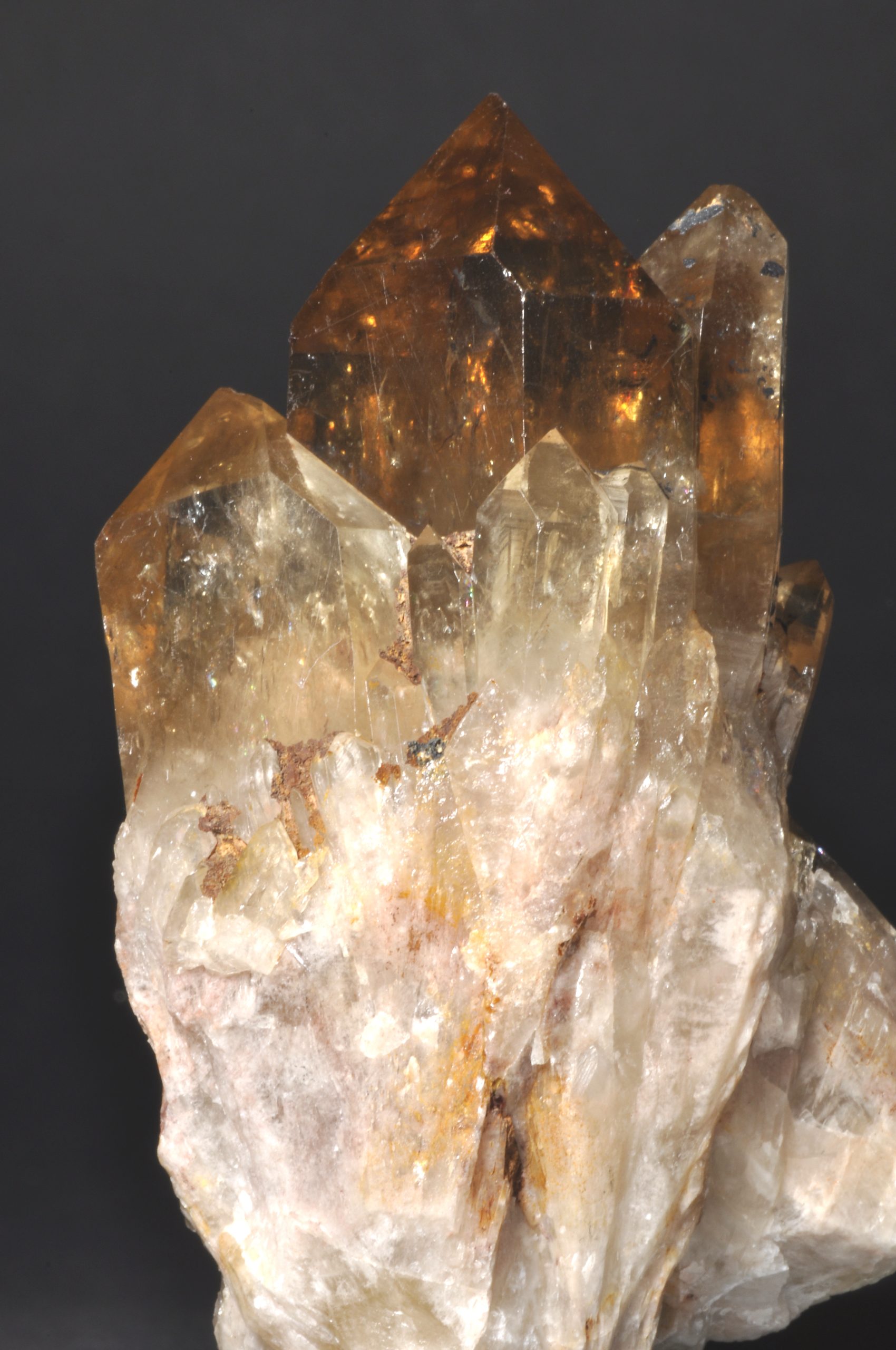
Citrine · Quartz · SiO₂ · silicon dioxide
Specimen register
At a glance
Mineral family
Quartz
Composition
SiO₂ · silicon dioxide
Crystal system
Trigonal
Mohs hardness
7
Typical colour
Pale yellow, golden, honey and brownish yellow; some material is orangy
Transparency
Transparent to translucent
Planet
Sun
Zodiac
Leo
Element
Fire
Understanding the Crystal
The material record
The stone itself
What It Is
Colour & Formation
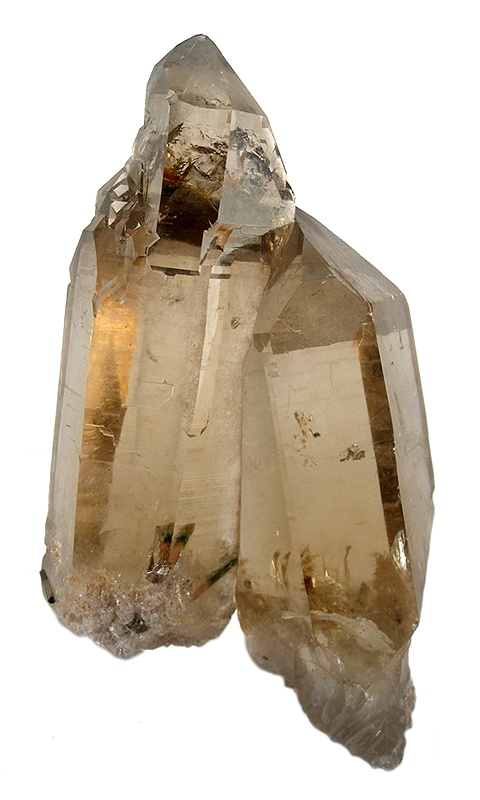
Inside the crystal
Tourmaline inclusions interrupt the amber-smoky quartz in this specimen from Pederneira, Brazil. Its internal features give us something specific to observe beyond colour alone.
Rob Lavinsky, iRocks.com · Source · CC BY-SA 3.0

Start with the stone before the symbolism.
Distinguish it
Natural Citrine, Heat-Treated Amethyst & the Modern Market
Natural Citrine
Quartz whose citrine colour occurs naturally. It is less common than the treated material that supplies much of today’s market.
Heat-Treated Amethyst
Amethyst quartz whose colour has been changed by heating. It remains quartz; treatment is part of its material history and should be disclosed. ‘Treated’ and ‘synthetic’ are different descriptions.
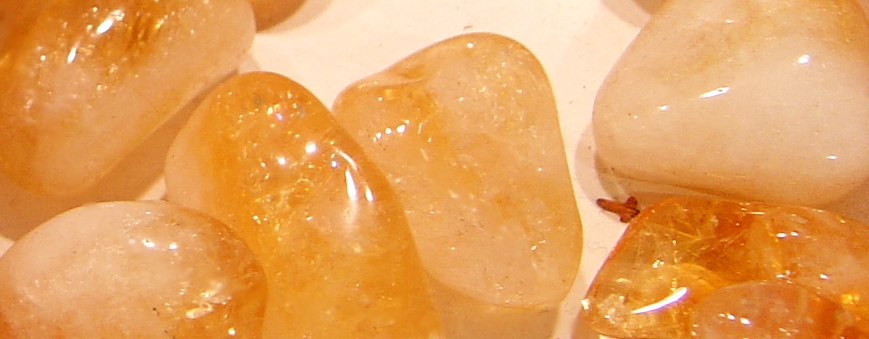
Colour shaped by treatment
This photograph is catalogued as heated amethyst. It gives the treatment comparison a concrete example: quartz can retain its identity while its colour changes.

Why treatment is used
Heating can turn suitable amethyst from purple to yellow or orange, making more yellow quartz available. GIA explains this commercial treatment. When buying, ask about treatment and provenance; an untreated history needs more than a photograph to establish.
Does that change its symbolic meaning?
Some practitioners distinguish natural colour from human treatment; others work with the finished object and its associations. The importance of that distinction depends on how you work with the stone.
Treatment is a material fact, not a moral judgment. What matters is knowing what you are looking at and having it represented honestly.
Trace / Interpret
Sources, stories & symbolic language
Lore & lineage
How Citrine Gathered Meaning
Historical record
GIA’s history collection illustrates Victorian citrine jewellery, including a brooch attributed to the 1860s. These pieces offer a glimpse of Citrine as an ornament: colour, craftsmanship and a stone chosen to be worn.
Later esoteric tradition
Citrine’s symbolic life unfolds through the writers and practitioners who work with it. Solar imagery, warmth and abundance form a recurring thread in contemporary correspondence systems.
Contemporary crystal practice
Judy Hall’s archived crystal writing connects Citrine with the Sun, Fire, creativity and abundance. Llewellyn’s Sunday Spell for Success also includes Citrine among solar or fiery materials, bringing those themes into ritual practice.
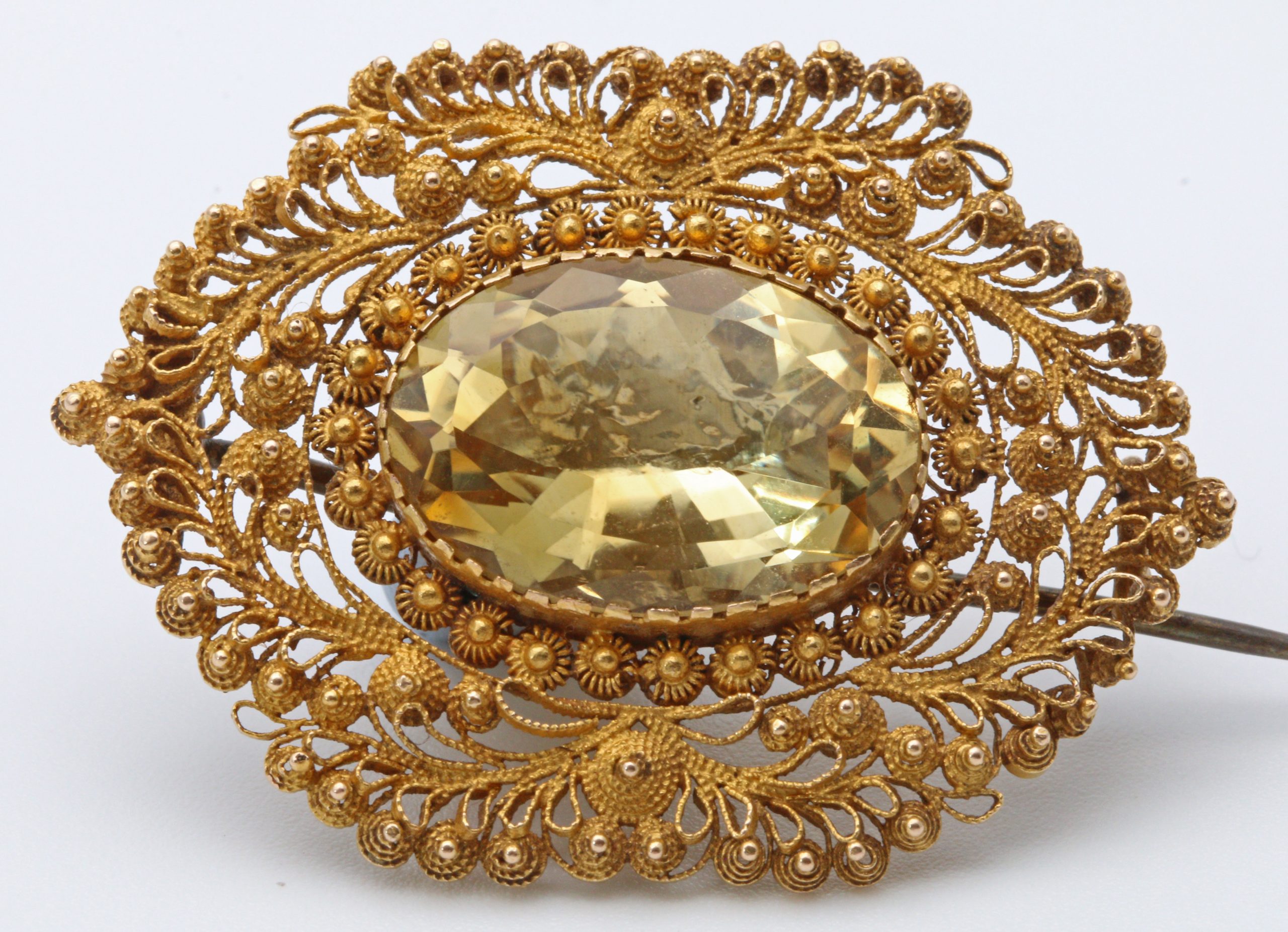
A stone chosen to be worn
An oval citrine sits within gold cannetille scrollwork in this brooch, dated around 1835. A surviving object connects the stone’s colour with the craft and taste of its time.
Charles J. Sharp · Source · CC BY-SA 4.0

Interpret it
Symbolic Themes
Light & clarity
Citrine speaks to bringing things into the light: an assumption, a priority, or a question that has remained vague. It is a stone to return to when seeking a clearer view.
Confidence & personal agency
Its solar character connects with self-trust, expression and the courage to take up space. Keep it close when beginning something that asks you to back yourself.
Creativity & momentum
Warmth and fire give Citrine an affinity with making, beginning and returning to unfinished work. Think of the first spark and the steady attention that keeps it alive.
Prosperity & abundance
A familiar prosperity stone, Citrine is associated with opportunity, success and a generous relationship with resources. Abundance here includes having enough, sharing well and recognizing what is already growing.
Warmth & vitality
Citrine’s sunny presence evokes energy, enthusiasm and a renewed appetite for life: the warmth of participating fully in the world around you.
Connections, with context
The Correspondence Map
Correspondences vary across traditions. These connections bring together sourced associations and Runic Rose’s own reading.
Sun
Planets
Judy Hall pairs Citrine with the Sun in her crystal medicine-wheel writing, connecting the stone with solar warmth and expression.
Fire
Elements
Leo
Zodiac
Runic Rose interpretation
Leo’s solar rulership and fire symbolism connect Citrine with confidence, creative expression and the courage to be seen.
Abundance & generosity
Other threads
Hall connects Citrine with abundance. At Runic Rose, that thread also opens into sufficiency, generosity and a thoughtful relationship with resources.
From the desk
A Runic Rose Note
Citrine was chosen as the first stone catalogued in The Runic Rose Library.
Connect it
Where the Threads Meet
Citrine + The Sun
A way to explore visibility, warmth and conscious expression through solar symbolism.
Citrine + confidence
Confidence as the willingness to participate, rather than the absence of doubt.
Citrine + abundance
A wider inquiry into resources, sufficiency and what it means to have enough.
Citrine + Amethyst
Two quartz varieties whose relationship makes the treatment question concrete.
Use / Explore
Practice, keeping & onward paths
Use, if useful
Working With Citrine
As an object
Collect it for its form, colour or geological interest. Examine it in changing indirect light, record what you notice, and keep provenance or treatment information with the specimen.
In reflective practice
A simple prompt: ‘What would become clearer if I gave it my attention?’ Keep the stone beside your notebook as a point of return while writing.
In ritual
Bring Citrine into a solar arrangement, a prosperity ritual, or a practice focused on confidence and creative beginnings. Pair it with a clear intention and a place you will return to.
In jewellery
Consider both meaning and wear: a setting should protect exposed edges, and the piece should suit the activities you actually do. Practical care belongs alongside personal significance.
A practical reference
Care & Keeping
Hardness
7 Mohs
Water
Brief washing is generally suitable for sound, untreated quartz. Check matrix, coatings, fillers, glued repairs and the setting before wetting a whole specimen or piece of jewellery.
Sunlight
Avoid prolonged intense light: some Citrine can lose colour. Keep display specimens away from strong heat and abrupt temperature changes.
Cleaning
Use lukewarm water, mild soap and a soft brush where the specimen permits. Rinse and dry. Avoid steam cleaning; ask a jeweller about uncertain treatments or mountings.
Storage
Protect points and edges from knocks. Store separately from softer stones and avoid loose contact with harder gems.
Jewellery use
Suitable for many jewellery uses with care; rings need protection from abrasion and impact. Mohs hardness describes scratch resistance, not immunity to chipping.
Keep exploring
Follow the Thread
Every entry in The Library leads somewhere else.
Trace the work
Sources & Further Reading
Mineral identity, composition, colour and the commercial treatment context.
Natural colour, heat-treated amethyst and the range of gem forms.
Mineral reference tables, including quartz composition and crystal system.
Illustrated Victorian Citrine jewellery, including a brooch attributed to the 1860s.
View all sources (9)
Hardness, light and temperature sensitivity, and cleaning guidance.
Catalogued mineral specimen NMNH 166840 from Minas Gerais, Brazil.
Contemporary crystal writing on Citrine’s solar, fire and abundance associations.
A contemporary ritual example grouping Citrine with solar or fiery materials.

Specimen photograph and public-domain dedication. Treatment history is not supplied.
CRYSTALS / 001